|
HBControls Solid State Relay Assemblies

We are a distributor for
HBControls
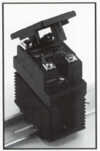
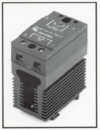
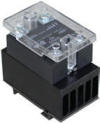
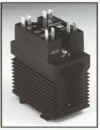
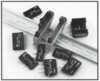
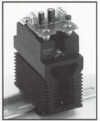
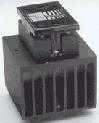
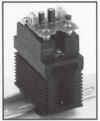
HBControls has developed a family of solid state relay and heat sink assemblies which virtually eliminate the need for any thermal engineering on the part of the design engineer.
The assemblies include a convenient DIN rail mounting configuration, finger-safe covers and utilize the highest quality relays available. All of the relays used in
the assemblies have received UL, CSA, VDE and CE certification.
SELECTING A SOLID STATE RELAY
ASSEMBLY AS A REPLACEMENT FOR MERCURY OR ELECTROMECHANICAL RELAYS.
We are frequently asked to
recommend our solid-state relay assembly in replacement of a mercury or
electromechanical relay or contactor. Often the only application information
provided is the contact rating of the relay currently being used, while this
information is helpful it is incomplete. It is imperative that the actual load
being controlled, and the ambient operating temperature is known when applying a
solid-state relay.
Solid-state relays, unlike
mercury or electromechanical relays, do not have moving parts which wear out due
to mechanical wear over a finite number of operations, theoretically, when
properly applied, they infinite life. It is important therefore, that in
addition to the current and voltage all characteristics of the load are
considered. Is the load resistive or inductive, AC or DC, three phase or single
phase. If three phase, are all three or only two legs being controlled, is the
circuit Delta or Y? A major enemy of the solid-state relay and often the cause
of premature failure is heat, when the relay is switching a load it is
generating an amount of heat proportional to the wattage of that load.
When replacing a mercury
or electromechanical relay with a solid state relay make sure that you have
determined the actual load being switched as well as the ambient temperature of
the environment in which the relay is being operated. Generally, if the load is
greater than 10 amperes AC and the ambient temperature is greater than 20
degrees centigrade the relay must be mounted on an appropriately sized heat
sink, or another method of directing heat away from the relay utilized. In the
case of larger current loads, or a higher ambient temperature, both a heat sink
and cooling fan may be required to direct heat away from the assembly.
HBControls engineers are
well versed in the practice of determining the appropriate combination of
solid-state relay and heat dissipating devices.
| How to Choose the Solid
State Relay That is Right for Your Application. |
Input
Range
|
|
0 |
.01 |
.04 |
.06 |
.10 |
.15 |
1.5 |
2.0 |
3.0 |
5.0 |
10 |
15 |
20 |
25 |
30 |
40 |
50 |
|
3
- 10 VDC
|
HBC-11-CMX60D5
0-60VDC, 600 PIV, NR
|
|
|
|
|
|
|
|
|
|
HBC-11-CMX60D10
0-60VDC, 600 PIV, NR
|
|
|
|
|
|
|
|
|
3
- 15 VDC
|
|
|
|
HBC-11-CX240D5
12-280VDC, 600PIV, NR |
|
|
|
|
|
|
|
|
|
|
|
HBC-11-CX380D5
48-530VDC, 1200 PIV, NR |
|
|
|
|
|
|
|
|
|
3
- 32 VDC
|
|
|
|
HBC-11-D2W202
24-280VAC, 600PIV, NR |
|
|
|
|
|
|
|
|
|
|
|
|
|
HBC-11-D2W203
24-280VAC, 600PIV, NR |
|
|
|
|
|
|
|
|
|
|
|
HBC-25D-NS
24-280VAC, 600PIV, SR |
|
|
|
|
|
|
|
|
|
HBC-25D
24-280VAC, 600PIV, SR HBC-25HD
48-530VAC, 1200PIV, SR HBC-625HD
48-660VAC, 1200PIV, SR |
|
|
|
|
|
|
|
|
HBC-50D
24-280VAC, 600PIV, SR
HBC-50HD 48-530VAC, 1200PIV, SR
HBC-650HD 48-660VAC, 1200PIV, SR |
|
|
|
|
|
|
HBC-25DA
24-280VAC, 600PIV, SR HBC-25HDA
48-530VAC, 1200PIV, SR |
|
|
|
|
|
|
|
HBC-50DA
24-280VAC, 600PIV, SR
HBC-50HDA 48-530VAC, 1200PIV, SR
HBC-650HDA 48-660VAC, 1200PIV, SR |
|
|
|
|
|
HBC-90DA
24-280VAC, 600PIV, SR
HBC-90HDA 48-530VAC, 1200PIV, SR
HBC-690HDA 48-660VAC, 1200PIV, SR |
|
|
|
|
|
|
HBC-T50DK
48-530VAC, 1200 PIV, TP (Ratings are per
Pole) |
|
|
|
|
|
|
|
HBC-90HDK-2
48-530VAC, 1200 PIV, TP
(Ratings are per Pole) |
|
4
- 10 VDC
|
|
HBC-11-CX241
12-280VAC, 600 PIV, NR |
|
|
|
|
|
|
|
|
|
|
|
|
4
- 15 VDC
|
|
|
|
|
|
|
HBC-D25HDA
48-530VAC, 1200PIV, DR - (Ratings are per Pole) |
|
|
|
|
|
|
|
|
|
|
|
|
HBC-D40HDA
48-530VAC, 1200PIV, DR (Ratings are per Pole) |
|
|
|
|
|
|
4
- 31 VDC
|
|
|
HBC-25CDA
24-480VAC, 600 PIV, SW HBC-25CHDA
48-530VAC, 1200 PIV, SW |
|
|
|
|
|
|
|
HBC-50CDA
24-480VAC, 600 PIV, SW
HBC-50CHDA 48-530VAC, 1200 PIV, SW
HBC-650CHDA
48-660VAC, 1200 PIV, SW |
|
|
|
|
|
HBC-90CDA
24-480VAC, 600 PIV, SW
HBC-90CHDA 48-530VAC, 1200 PIV, SW
HBC-690CHDA 48-660VAC, 1200 PIV, SW |
|
|
|
15
- 32 VDC
|
|
|
|
|
HBC-11-CXE240D5
12-280VAC, 600 PIV, NR |
|
|
|
|
|
|
|
|
|
|
|
|
HBC-11-CXE380D5
48-530VAC, 600 PIV, NR |
|
|
|
|
|
|
|
|
|
|
|
|
|
HBC-D25HEA
48-530VAC, 1200 PIV, DR - (Ratings are per Pole) |
|
|
|
|
|
|
|
|
|
|
|
HBC-D40HEA
48-530VAC, 1200 PIV, DR - (Ratings are per Pole) |
|
|
|
|
|
|
18
- 36 VAC
|
|
|
|
HBC-11-CXE240A5
12-280VAC, 600 PIV, NR |
|
|
|
|
|
|
|
|
|
90
- 140 VAC
|
|
|
|
HBC-11-CX240A5
12-280VAC, 600 PIV, NR |
|
|
|
|
|
|
|
|
|
|
HBC-25CAA
12-280VAC, 600 PIV, SW HBC-25CHAA
48-530VAC, 1200 PIV SW |
|
|
|
|
|
|
|
HBC-50CAA
12-280VAC, 600 PIV, SW
HBC-50CHAA 48-530VAC, 1200 PIV SW
HBC-650CHAA
48-530VAC, 1200 PIV, SW |
|
|
|
|
|
|
HBC-90CAA
12-280VAC, 600 PIV, SW
HBC-90CHAA 48-530VAC, 1200 PIV SW
HBC-690CHAA 48-530VAC, 1200 PIV, SW |
|
|
|
90
- 280 VAC
|
|
|
HBC-25A-NC
24-280VAC, 600PIV, SR |
|
|
|
|
|
|
|
|
|
HBC-25A
24-280VAC, 600PIV, SR HBC-25HA
48-530VAC, 1200 PIV, SR HBC-625HA
48-660VAC, 1200 PIV, SR |
|
|
|
|
|
|
|
|
HBC-50A
24-280VAC, 600PIV, SR
HBC-50HA 48-530VAC, 1200 PIV, SR
HBC-650HA 48-660VAC, 1200 PIV, SR |
|
|
|
|
|
|
HBC-25AA
24-280VAC, 600 PIV, SR HBC-25HAA
48-530VAC, 1200 PIV, SR |
|
|
|
|
|
|
|
HBC-50AA
24-280VAC, 600 PIV, SR
HBC-50HAA 48-530VAC, 1200 PIV, SR
HBC-650HAA 48-660VAC, 1200 PIV, SR |
|
|
|
|
|
HBC-90AA
24-280VAC, 600 PIV, SR
HBC-90HAA 48-530VAC, 1200 PIV, SR
HBC-690HAA 48-660VAC, 1200 PIV, SR |
|
|
|
|
|
|
HBC-T50AK
48-530VAC, 1200 PIV, TP |
|
|
|
|
|
|
|
HBC-90HAK-2
48-530VAC, 1200 PIV, TP |
|
0 |
.01 |
.04 |
.06 |
.10 |
.15 |
1.5 |
2.0 |
3.0 |
5.0 |
10 |
15 |
20 |
25 |
30 |
40 |
50 |
|
1. Select the Load
Current to be Switched and the Input Range of the Controller.
Find the Current
Load to be switched (horizontal axis) right, and follow it down to
the appropriate Controller Input Range (vertical axis). |
2. Select Model Numbers
with Correct Voltage Range and Peak Volts.
Find the Model
Numbers available paying close attention to Voltage Range, Peak Maximum
Volts and Style of Relay.
SR=Standard Relay, Lug Terminals
NR=Narrow Relay, <.5" Wide, Stripped Wire Terminals
DR=Dual Relay, .187" Faston Terminals
TP=3-Phase Relay, Lug Terminals
SW=Stripped Wire Terminals |
| |
|
|